Drinking Water

Best Water Softeners for Hard Canadian Water (2026)

Category picks matched to measured municipal hardness, from 200+ mg/L prairie groundwater to moderate river supplies.

As an Amazon Associate, OpenStats earns from qualifying purchases.

OpenStats tracks drinking water hardness across 172 Canadian communities, and the spread is wide: coastal BC cities like Vancouver sit near 10 mg/L while prairie supplies in Regina, Saskatoon, and Calgary run from 160 to well past 300 mg/L. That range is why a single "best softener" answer misleads: the right system depends on the mg/L figure at your address, your household size, and whether you own or rent.

The picks below are organized by situation rather than by brand ranking. Each links to the matching Amazon.ca category so you can compare current models and prices directly. Check your city's measured hardness on its province page first, or read the OpenStats hardness guide for how the classes are defined.

71
Very hard cities
≥ 180 mg/L in sample
129
Hard or above
≥ 120 mg/L
180 mg/L
Softener threshold
Health Canada aesthetic scale
$1K–$2.5K
Typical install
CAD, whole-house salt system

The picks

Six categories covering the common Canadian hard-water situations, from prairie groundwater to rentals.

Sponsored

Best for very hard water (200+ mg/L): salt-based whole-house softener

For Calgary, Regina, Saskatoon, and most prairie groundwater supplies, a salt-based ion-exchange softener is the standard fix. It treats every tap in the house and removes hardness at any level a Canadian municipal supply reaches. Check for a metered (demand-initiated) control valve, which regenerates on actual water use instead of a timer and cuts salt consumption.

Sponsored

Best for large households: high-capacity 40,000 to 48,000 grain system

A family of four on 250 mg/L water burns through softening capacity quickly. Undersized units regenerate constantly and wear out early. For four or more people on very hard water, size up to the 40,000 to 48,000 grain range, or a dual-tank system that keeps softened water flowing during regeneration.

Sponsored

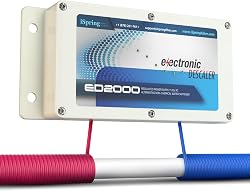
Best low-maintenance option: electronic descaler

An electronic or magnetic descaler clips onto the incoming pipe, uses no salt, and needs no drain line or plumbing work. It conditions scale rather than removing hardness minerals, so soap performance stays the same, but scale buildup on fixtures and heating elements is reduced. A reasonable fit for moderate hardness (120 to 180 mg/L) and for condos where a full softener is impractical.

Sponsored

Best first step: water hardness test strips

Municipal reports publish plant averages; the number at your tap can differ, especially on long distribution runs or private wells. A strip test costs a few dollars, takes seconds, and gives you the mg/L figure you need to size a system. Buy this before you buy anything else on this page.

Sponsored

Recurring supply: softener salt

A salt-based system on very hard water goes through a 20 kg bag roughly every four to eight weeks depending on household size. Pellets or cubes work in most brine tanks; check your manual before switching types. Potassium chloride is the alternative for households limiting sodium, at a higher per-bag cost.

Sponsored

Best for renters: point-of-use shower filter

Renters in hard-water cities rarely get a say in whole-house treatment. A shower filter threads onto the existing arm in minutes, reduces chlorine and some scale effects at one fixture, and moves out with you. It leaves water heaters and dishwashers untreated, so treat it as a comfort upgrade rather than a softener substitute.

Softener type comparison

Match system type to measured hardness; verify mg/L on your city page first.

System types

TypeBest forMaintenanceTypical costNotes
Salt ion-exchangeHardness ≥ 180 mg/L (very hard)Salt refills every 4–8 weeks$800–$2,500 installedStandard for Calgary, Regina, and southern Alberta river supplies.
Dual-tank / high-capacityLarge households, peak winter hardnessTwo resin tanks alternate regeneration$1,500–$3,500 installedSized for seasonal swings on Bow and Elbow River supplies.
Electronic descalerModerate hardness (120–180 mg/L)No salt; limited scale control$200–$600Secondary option where full softening is not required.
Portable shower / point-of-useRenters, single-fixture scaleCartridge replacement$30–$150Treats one fixture; water heaters and dishwashers stay on hard water.

How to choose

Four checks before spending anything on a whole-house system.

Start with the number, in mg/L. Test strips or your municipal annual report give you hardness as CaCO₃. Below 120 mg/L, skip this page and read the filter guide instead. From 120 to 180 mg/L a descaler or point-of-use option covers most complaints. Above 180 mg/L, whole-house ion exchange is the treatment that actually removes the minerals.

Size by grain capacity. Multiply daily household use (roughly 250 to 300 litres per person) by hardness in grains per gallon (divide mg/L by 17.1) to get daily grain load, then pick a unit that regenerates about once a week at that load. A family of four on 250 mg/L water lands in the 30,000 to 48,000 grain range. Oversizing slightly beats undersizing, since constant regeneration wears resin and wastes salt.

Check certifications and the control valve. NSF/ANSI 44 is the standard covering residential cation-exchange softeners, verifying capacity and material safety claims. A metered, demand-initiated valve regenerates on actual water use; timer-based valves regenerate on schedule whether needed or not and cost more in salt over the unit's life.

Insist on a bypass valve. A bypass lets you route water around the softener for outdoor taps and service work, and installers can also run an unsoftened line to the kitchen cold tap, which Health Canada recommends for households on sodium-restricted diets.

Hardest tracked cities

Hardness from municipal annual water quality reports where verified; regional estimates otherwise.

City hardness ranking

CityProvinceHardnessClassRecommended lead
GuelphON460 mg/LVery hardWater softeners for hard water
KitchenerON400 mg/LVery hardWater softeners for hard water
WaterlooON400 mg/LVery hardWater softeners for hard water
Belleville - Quinte WestON279 mg/LVery hardWater softeners for hard water
YorktonSK279 mg/LVery hardWater softeners for hard water
SherbrookeQC277 mg/LVery hardWater softeners for hard water
VictoriavilleQC276 mg/LVery hardWater softeners for hard water
HawkesburyON271 mg/LVery hardWater softeners for hard water
IngersollON271 mg/LVery hardWater softeners for hard water
MataneQC271 mg/LVery hardWater softeners for hard water
SydneyNS270 mg/LVery hardWater softeners for hard water
BrantfordON266 mg/LVery hardWater softeners for hard water
Prince AlbertSK265 mg/LVery hardWater softeners for hard water
Sainte-MarieQC262 mg/LVery hardWater softeners for hard water
TerrebonneQC259 mg/LVery hardWater softeners for hard water
BrockvilleON257 mg/LVery hardWater softeners for hard water
CollingwoodON255 mg/LVery hardWater softeners for hard water
Port AlberniBC253 mg/LVery hardWater softeners for hard water
LavalQC253 mg/LVery hardWater softeners for hard water
EdmundstonNB252 mg/LVery hardWater softeners for hard water

Frequently asked questions

What hardness level needs a softener?

Health Canada classes water above 180 mg/L as very hard, and that is the practical threshold where whole-house softening pays for itself in appliance life and detergent use. Between 120 and 180 mg/L it is a judgment call; below 120 mg/L the money is better spent on drinking-water filtration.

Is softened water safe to drink?

Yes, for most people. Ion exchange swaps calcium and magnesium for sodium, adding roughly 46 mg/L of sodium for every 40 mg/L of calcium removed. Health Canada recommends that anyone on a sodium-restricted diet keep an unsoftened tap for drinking and cooking, which installers handle with a kitchen cold-line bypass.

Sodium chloride or potassium chloride?

Both regenerate the resin the same way. Sodium chloride costs less and is the default. Potassium chloride avoids adding sodium to the water, which matters for restricted diets, but costs three to four times more per bag and is a separate consideration for anyone managing kidney disease or potassium levels on medical advice.

Do electronic descalers actually work?

They change how minerals crystallize so scale adheres less, and independent testing shows results vary with water chemistry. Hardness stays in the water, so soap and detergent behave the same. On supplies above 180 mg/L, an ion-exchange softener remains the reliable choice; a descaler suits moderate hardness or situations where salt systems are ruled out.

How much does a softener cost to run?

Budget for salt (a 20 kg bag every four to eight weeks on very hard water), a small amount of water used during regeneration, and resin replacement after 10 to 15 years. A metered valve trims salt use noticeably compared with timer-based regeneration.

In depth

What a softener actually does to your water

The ion-exchange mechanism, the sodium tradeoff, and how to size and maintain a system correctly.

A conventional water softener works by ion exchange. Hard water passes through a tank filled with resin beads coated in sodium ions; as calcium and magnesium in the water pass over the beads, they exchange places with the sodium, leaving the water measurably lower in hardness and the resin bed loaded with calcium and magnesium. Once the resin's capacity is used up, the system regenerates by flushing the bed with a concentrated brine solution, which strips the accumulated calcium and magnesium back off and discharges them, along with the leftover brine, to the sanitary sewer, restoring the resin's sodium coating for another cycle.

The sodium tradeoff

Softening swaps minerals rather than removing them outright. Health Canada's Guideline Technical Document for sodium notes that for every 40 mg/L of calcium removed by a typical ion-exchange softener, the treated water gains roughly 46 mg/L of sodium. Health Canada has set no maximum acceptable concentration for sodium in drinking water because it is considered safe at levels found in Canadian supplies, but it does set an aesthetic objective of 200 mg/L based on taste, and a separate advisory threshold of 20 mg/L for individuals on a strict sodium-restricted diet. The official Guidelines explicitly recommend that households using a sodium-based softener keep a separate, unsoftened supply for cooking and drinking, typically achieved by bypassing the kitchen cold tap around the softener during installation.

  • Households with no sodium-restricted diet in the home generally do not need to change anything beyond routine awareness of the tradeoff.
  • Households managing hypertension or kidney disease on medical advice should either bypass the kitchen tap or ask a plumber to install a dedicated unsoftened line for drinking and cooking water.
  • Potassium chloride can replace sodium chloride as the regenerant salt at a higher ongoing cost, avoiding the sodium increase entirely, though Health Canada notes potassium loading is a separate consideration for anyone with kidney disease or on potassium-restricting medication.

Where the discharge water actually goes

Regeneration brine leaves the home through the sanitary sewer connection, and in Canada this discharge is governed by municipal sewer use bylaws rather than a single federal standard. Most bylaws focus on preventing infrastructure corrosion and protecting wastewater treatment plant performance, since elevated chloride loading from softener brine can be difficult and costly for municipal plants to remove. Homes on a septic system rather than municipal sewer should check with local public health authorities, since some source water protection areas in Ontario and elsewhere have flagged softener backwash as a contributing factor for groundwater chloride levels near wellhead protection zones. A demand-initiated regeneration (DIR) softener, which regenerates based on measured water use rather than a fixed timer, reduces both salt use and brine volume compared with older timer-based systems.

Maintenance and the appliance ROI case

The practical case for softening in hard-water cities rests mainly on appliance longevity and maintenance cost rather than health, since hardness carries no Health Canada health guideline. Scale buildup inside tank-style water heaters reduces heating efficiency and can shorten appliance life; dishwashers and washing machines in very hard water areas often need more detergent to perform the same job and accumulate mineral deposits on heating elements over time. Regular maintenance, salt refills on schedule and periodic resin bed cleaning, is what determines whether a softener keeps performing at its rated capacity for the 10 to 15 years a well maintained system can last. If your municipal hardness is under 120 mg/L, the filtration guide is a more relevant starting point than a full softener installation. For hardness classes and how they are reported nationally, see the OpenStats water hardness guide.

Signs a softener needs service before it fails outright

  • Soap and shampoo stop lathering the way they used to, or leave a filmy residue on skin and glassware.
  • White or chalky scale reappears on faucets and shower fixtures within weeks of cleaning.
  • The brine tank runs low on salt faster than expected, which can indicate a leak in the brine line or a control valve stuck mid-cycle.
  • Water pressure drops noticeably, which can point to resin bed fouling that a professional cleaning or resin replacement resolves.

Most manufacturers recommend replacing softener resin every 10 to 15 years even without an obvious failure, since resin capacity degrades gradually with iron fouling and chlorine exposure well before a system stops working entirely. A system that quietly loses capacity without an alarm or visible fault is a common reason a household concludes softening "doesn't work anymore" when the underlying issue is simply overdue maintenance rather than a design problem.

← Back to city explorer · Browse by province · Water filter guide